Bringing you into the world
was a half-cocked plan,
born of accident and bravado.
Of one thing I was certain:
I would do better than my parents.
My smart resolve soon fell away
into the ruts of their well-worn path.

From the Box Store of Beliefs,
I bought a large suitcase.
Around scratchy clothes and
tight shoes, I arranged for you
all the useless nothings
Of Propriety and how.it.is.supposed.to.be.

I watched that unwieldy valise
bounce against your new knees.
I knew this was best for you
because Important Things are Heavy
and keeping a grip on Big Truths
takes tenacity and brute strength.

As the years went by,
The pillars of what I thought
I knew, what I thought was true,
Toppled.

I remembered
The dream of another way,
Of the path that says:
It is never too late to let go
of the Warping Weight.

It is not too late
For us
to slide that clunker
out the rear car door
into a backwash ditch.

Now, I’m buying you a big bandana
and a stick.

I’m packing you a bundle
Of deodorant and daring
and creativity and chapstick
and sriracha and compassion
and fuzzy socks and
the salve of let.it.go and
the balm of how.it.could.be.

I will watch you set off,
A bright bandana ball bobbing behind you.

Yes, that will be a happy way to release you into the world.
Don’t be a wallflower,
Spring.
Don’t slip in silently
and stand in the shadows.
Don’t be afraid of Winter,
that bully.
We’ve had enough of his
biting remarks and
cold retorts.
I’ll punch him
in the nose for you
and take the Saturday
just to watch him
sputterandspit.
Just step forward
and dance with me.
I’ll dance with you
as long as you like,
long after that
wildly popular sweaty
Summer shows up.
Letting go is like
Letting go of honey,
or letting go of dirt
under your fingernails after
an afternoon in the garden

Letting go is like
dropping a hot-handled skillet,
the imprint bubbled into your palm.

Or it is like lingering.
It is losing the scent
from a lover’s pillow.

It is the slow melt.

It is marking each labored breath
while feeling the planet’s rotation
under your feet.

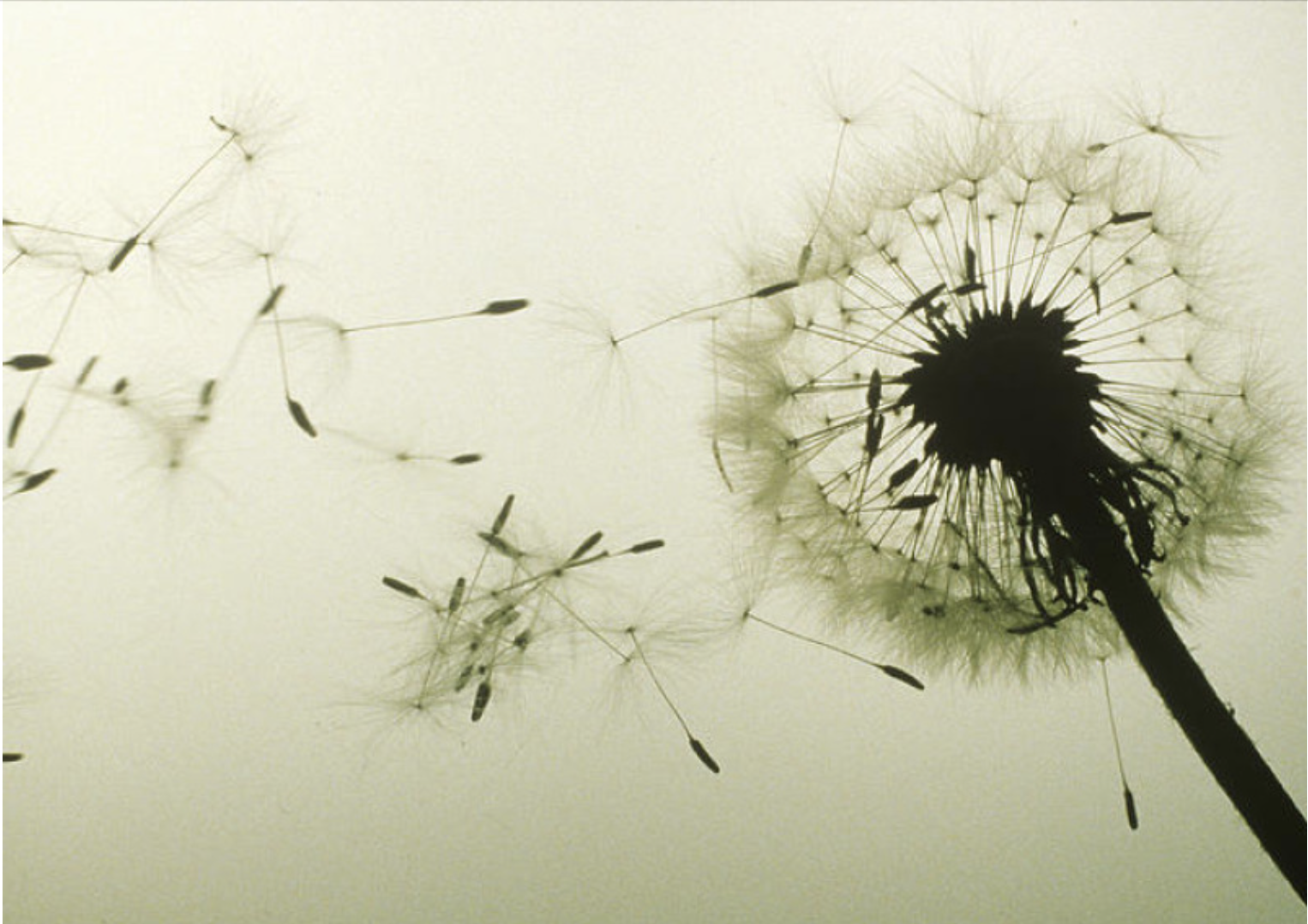
Letting go is like blowing
a dandelion
into the wind,
a contrary wind,
that whisks tiny tailed wisps
up your nostrils
under your eyelids
into your ears.

Letting go is artless wretchedness.
There’s no beauty in it:
It is a roll in the mud and
a stumble through the briars.
But when you emerge,
your dented grace
and seedling peace
will be enough.
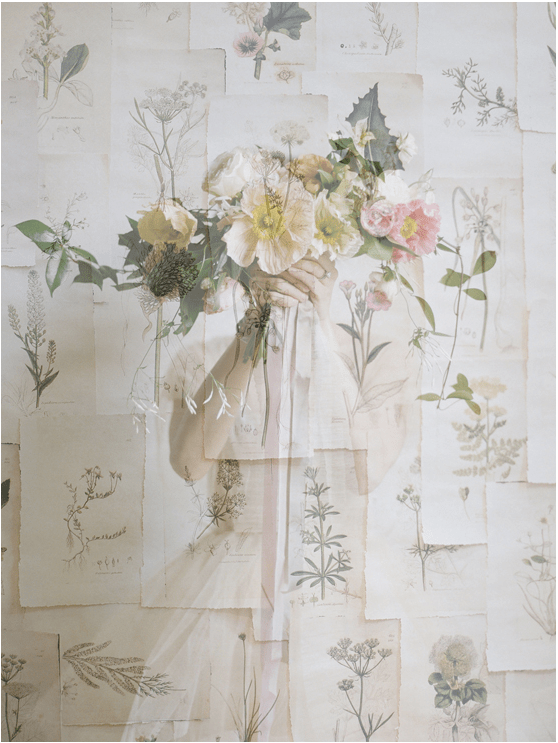
Photo Credit: Lori-Lee Thomas @lorileethomasart and Christine Rogers @christinevautour
Ms. June leads me back to the small empty office just past the conference room.

“You can wait here, Mr. Taylor,” she says, motioning to a blue plastic seat, the only piece of furniture in the room.

Her eyes settle on the safety scissors in my hand.

I slip them into my pocket.

She hesitates, then reaches to pull the door shut.  “You know you can’t leave, right?”

I nod slowly, looking at her steadily through my one focused eye.

She blushes and stammers, “Of course if you need the bathroom…” her voice trails off as I shoo her away and turn to face the window.

Ms. June bugs the hell out of me, but I usually don’t let her in on that.

She came to work here at Elkwood Elementary seven years ago, after her husband Bill died of a heart attack.  She likes to tell people we were classmates.  I was an eighth grader in this building when she was a kindergartener.  Maybe I tied her shoes.  Once.

I’ve been the custodian now, the only custodian, of this school for forty-nine years.  And for forty-two years I did just fine without her advice and direction.  My position on this topic has not changed.

The door clicks behind me, and I walk closer to the large window that overlooks the school’s side yard.  The blazing sun is high overhead, softening the snow into mushy slush.  Harold, Madge, and Jacob spiral up and down the trunk of a middle-aged maple tree.  It’s early December, and they spent the fall hauling in a bumper acorn crop.  I was happy for their help, and the way I figure it, they’ve earned the right to goof around.

I study the maple, and wait for the world to stop whirling around me.  I know I’m back on steady ground when the usual grudge balls tight in my chest.

Sure. The tree’s shapely and full, a true campus centerpiece. Over the years that tree’s been praised many times; people talking to me as if it’s mine.  But I’ve got a quarrel with this Maple. It’s always the first to turn in the fall, a busy body aunt who can’t wait to tell you the latest family dirt.  It’s been singing “Fall’s here! Fall’s here!” in early September since 1990, the year I helped the kids plant it for Earth Day.  I’ve been cleaning up its messes ever since.  Thirty-four years, to be precise.  I never had children, but I wonder if this is how parents feel when they find themselves the recipients of a real prize kid - cuter than heck and also a general nuisance.

Don’t get me wrong.  I wouldn’t be working in a K-8 if I didn’t enjoy kids.  I have a great time with them, especially when I get invited into the classrooms to read.  I make it a point to know every kid’s name.  There’s only about 30 kids per grade, and even if you don’t know them, know them, over a nine year period, you somehow do.  Most of them are great citizens.  Truth told, I’m not too keen on the rich, attractive ones, sporting their Hollister and Vineyard Vines and stinking to high heaven of Polo.  Instead of developing their actual characters, they’ll skate through life on their parent’s money and inherited good looks.

I’ve had a free ticket to this fashion show going on fifty years.  I liked the 80’s.  Shirts buttoned up with a little string bow, polos, rugby shirts, sweaters, wrangler jeans.  Covered up and belted.  Decent.  In the 90’s, fashion went south fast.  Black became a thing.  Belts became scarce and necklines dropped, and lace started showing up on the outside.  I combated the local belt shortage by ordering thirty belts from the JC Penney catalogue.  I kept them in my supply closet and gave them to the 8th grade boys who seemed to be in the most need.   When the kids all started showing up to school in Carhartt and Dickies, I was confused.  When did the outfit of hard-laboring men become fashionable?  The teachers can’t even get the middle schoolers to do their homework, but they walk around like they’re ready to dig ditches or shovel snow at 30 below. Big pretenders.

The new principal’s been here for about five years.  She arrived in 2019 with this bright idea to give kids community service instead of afterschool detention.  Ms. Costa is welcome to her own ideas, but when they start involving me, it’s a whole different story.  That first fall, she called me into her office and told me what a great job I’d done over the summer “making the school shine”.  Then with a huge smile, she informed me I was getting a “promotion”.

I know all about “promotions”.  Praise followed by promotion is how I got treated to a third, then fourth tour of Vietnam.  It’s how I got to spend the better part of a year at Walter Reed, getting shrapnel pulled from my innards and learning how to walk on a leg and a half.  Promotions, my ass.

Costa said I’d now be a team leader, and four afternoons a week I’d be supervising detention students who’d take out trash, sweep classrooms, and clean whiteboards.  My face must’ve registered alarm because she said, “Mr. Taylor, it will be fine.  We did this at my other school.”

Before coming here, she’d been an assistant principal at a big Madison elementary.  She didn’t know that things are done different in small Wisconsin towns.  This was conservative, northern Wisconsin.  We have no use for some freewheeling, idea-a-minute liberal.

I knew the detention kid type.  For years, I’d watched them plod out the front doors, an hour after school let out, looking for a ride home from a family member they’d inconvenienced.  These were the kids that stepped on ketchup packets and drew penises on desks and vagina portals on bathroom stalls. These were the kids who came late or snuck out early, the kids who threw acorns at birds.  These were the kids who I read about later in the police logs and sometimes, newspaper.  I had no patience for these kids.

I crossed my arms and looked steadily at her from under heavy, furrowed eyebrows. She stared back.  She held out a clipboard, and after an extended moment, I reached out and took it.  I pretended to study it, but the words crisscrossed on the paper.  I thought, This woman was an egg in her mother’s ovary when I started working here.  Before dismissing me, she said, “Meet me at 2:42 in the detention room.”

I turned on my heel and strode out of her office.  I don’t exactly stride, but in my mind, I was striding.  In the quiet of my closet office, I saw she’d worked out a schedule.  Tuesday and Thursday afternoons were for grades fifth and sixth; Wednesday and Friday, seventh and eighth.  No Mondays since I don’t come in until noon being I work nine hour days the rest of the week.  Every afternoon that week, she said things like “pride in our school” and “making amends to your community” and “respecting Mr. Taylor” but mostly I just ignored her and watched the second-hand tick around the clock above the door.

I did my best to keep my emotions in check.  Since the war, I’d only organized myself, and I liked my predictable after-the-bell routine.  The first week I felt angry and out-of-sorts, but then, my anger subsided into resentment.  By the end of the third week, I had come to reluctant acceptance.  By week four, I’d figured out this new routine, and I was keeping a closer eye on the renegades, especially after a few of my favorite teachers swung by to gently complain of dust piles and streaks and uncapped markers.

The fifth and sixth grade group never had more than two; but the seventh and eighth grade group got as big as four, with repeat offenders.  I noticed that over time, the groups became smaller, and interestingly enough, more efficient.  I spent less time scrubbing images of genitalia off bathroom stalls.  Missiled grapes and raisins, a thing of the past.  Sometimes I’d look up from my desk to see a kid peering into my office, flashing a quick wave and a grin.

By the time February rolled around, I’d be lucky if an afternoon had two students.  Some days, I’d have none.  Sean and Lexi, Max and Anders, Archer and Casey, William and Jackson had become inconsistent regulars and not always in pairs as before.  Sometimes, they’d hang out and help, even if they weren’t in trouble.  I put a candy bowl on my desk.

On March 13th, the god-damned governor lost his mind and closed down the schools.  For the first couple of weeks, it was like summer break.  I tended to the backlog of small maintenance and deep cleaning.  For the very first time, I’d taken off Christmas break and gone down to Florida to visit my sister May and brother-in-law Carl.  We played cribbage and darts and soaked in the sun on the pool deck with the other retirees, and I didn’t give the school or my to-do list a thought.

By the first week of April, I was lonely.   The union employees all stayed home, meeting with kids on screens.  The school board decided I needed to be at school, keeping an eye on things and getting ahead of maintenance, whatever that meant.  I watered a lot of plants. Fed a couple hamsters.

The building was eerie and still.  The faint light streaming into darkened hallways and the glaring exit signs gave me the creeps.  The school was certainly haunted.  So was my head.  I started bringing along my dog Gretchen to keep the ghosts at bay and to hear another creature’s breath.  I even brought in Biscuit, my ginger cat, but after spending two hours looking for her one afternoon, I left her home.

The principal came in once or twice a week.  We stood well apart, me in my nurse’s station mask, she in her homemade calico one, and I briefed her on my activities.  I suggested giving a few rooms a fresh coat of paint. We agreed on five neutral shades, and I mailed the teachers paint strips with their color options circled.  Once I started the project, I bought one gallon of paint at a time, ensuring myself a daily trip to the hardware store; ensuring myself of at least one conversation.  I’d never gotten a computer, so I settled into a sunny spot in the library every morning to read the New York Times and the Wisconsin State Journal.  My sister was my third news source; she was hotter than a hornet about the mask restrictions and venomously opposed to the Covid vaccination.  I envisioned a picture of Fauci right smack in the middle of her husband’s dartboard.

I can’t rightly tell you what I thought.  I knew that people were dying left and right, and the world was so damn quiet. I missed the kids.  I missed my crew.  I ate through all the candy.

When the world gets too quiet, all the remembering kicks up, like gravel dust off a dry road in the dead heat of summer.

I re-enacted my own first day of school, August 1957.  Imagining myself in tan pants and a white button down shirt, I walked through the front door and turned left.  I counted past four classrooms and walked into the fifth.  Back then, the chalkboard had been green, and the bulletin board sported a rainbow flower garden and big bubble letters that spelled out “Welcome!”.  Student names were written on flower petals and “Taylor Anderson” was written on the petal of a black-eyed Susan.

I sat on the desktop of my old seat near the window, and I looked outside.  The old metal playground with its monkey bars, curly slide, seesaws, and spinner had been replaced years ago by bulky, plastic, soft-edged equipment that lacked all the thrilling danger.  Since its installation, not one child had tipped over from dizziness.  Shiners and broken bones and knots on the head were once the childhood trophies of pushing just beyond one’s limits.  The same wounds by the hands of another carried no bragging rights, and it seemed to me efforts to make the world safer were a bit misplaced.

I studied the large oak tree that shaded most of the lawn; in the previous sixty-three years, it had grown larger and more scraggly.  Every year I pruned it in the winter and monitored it year-round for damaged bark or broken branches.  Once I found a few students aimlessly picking and peeling the bark away from the trunk, and I didn’t release them until they’d had a complete lesson on fungus-carrying, sap-eating beetles.  The following week I felt proud to see the science teachers had featured the topic on their bulletin board: “Oak Wilt Facts”.

I was one of those kids who spent a lot of time looking out the window.  I felt safe at school, and when I slid into my desk every morning, I let out a long breath and took a spacewalk.  School was fairly easy for me, and after exploring the far reaches of nothingness, I’d buckle down, do the assignments, read the passage, write the response, and then go traveling again.  I lived on a farm outside of town with my mom, younger sister, elderly grandparents, and an angry uncle.  The marks he left on me were always hidden under my clothes.  Then, one day in 7th grade, a late-flourishing black eye bloomed on my face during first period, and I was sent to the nurse, and then the principal.  My mom showed up, a social worker showed up, the police chief showed up.  My uncle was a well-known scrapper in our little town of corner taverns, and he landed himself a month of overnights on a hard bed, all expenses paid.  He never was so careless as to leave a visible mark again.

During my freshman year, my grandparents died, one after the other.  They left a few thousand dollars to my mother and the farm to my uncle.  We moved into town, and life became peaceful and predictable.  I attended the regional high school and played football and ran track.  I learned to play the trumpet and spent a lot of time in the science labs.  I intended to work a year before heading off to college, but my July 8 birthday gifted me with #13 in the draft lottery.  Doubly unlucky, I was shipped off to Vietnam.

I was gone four years.  My uncle died from liver disease while I was away, and he left me the farm.  I was never sure if it was a gift of revenge or apology.  Either way, I was sure I didn’t want it.  My mom sold it on my behalf and put the money in my bank account.  When I got home, I split it three ways with her and my sister.

I don’t want to think about the war today.  I will say that in the spring and summer of 2020 I spent a lot of time on war maintenance.  I painted over wounds and swept back memories.  I edged their grassy edges, neat and square, and trimmed back unruly branches.  I was valiant in my effort, but I still ended up with a sad, gnarled mess in my mind.  My sister gave me the number to a veteran’s support line, and I spent many evenings with my cat on my lap and my dog tucked into the crook of my arm, sharing my experiences with a fellow veteran.

Things picked up again in August.  I arranged all the classroom desks to be six feet apart, and we bought new desks for the cafeteria so the kids could eat at a distance.  The teachers returned, and overall, they were snappish and anxious.

After a week of settling back in, the kids arrived.  They were different.  Some were subdued and frightened, others were angry and defiant.  The afterschool “Restorative Discipline” started up again, but now they were assigned for refusing to wear their mask or using foul language or wearing an eyebrow-raising outfit.  New students were kicking up with misbehavior, but from time to time, my old crew would make an appearance.  They started popping by my office again, and I was glad to have remembered to refill the candy bowl.

Two weeks in, we had our first Covid case, and all the kids stayed home for a day while I wiped every damn surface of the building.  Insanity.  We were in and out all year.  Everyone was trying to be upbeat and act normal, but the world was unpredictable and frightening.  I had a hard time learning the kindergarteners’ names that year because of their masks.  After a while, I got to know their size and gait, and that made it easier.

In the fall of 2022, everyone came back without masks.  With a quick jolt of surprise, I realized that the crew of 7th and 8th graders had all transitioned to the high school.

One day I was in my office, looking for a key to the crawlspace, and Elijah Sorenson, now a 7th grader, came to the door.  He’d never gotten in trouble for anything worth remembering.  A good kid.  Funny.  He said “Hey, Mr. Taylor!”, and I exclaimed, “Eli! You’ve sprouted up!” He reached in to grab a candy from the bowl, and I was surprised to see his fingernails were painted purple.  I was still staring down at the candy bowl when he left.

I puzzled over his fingernails all night.  I wondered if he was an artist or a musician.  I knew David Bowie and Kurt Cobain had painted their fingernails.  Then I wondered how this random bit of trivia had come to linger in my head.  I must have read about it in my wife’s People magazines.  I was sad and bored after she died, and her magazines just kept coming.  I spent a couple of years emersed in scandal, murder, and the lives of the rich and famous.  By the time the magazine stopped appearing in my mailbox, my feet were under me again, and I had gotten a cat and dog to keep me company.  I forgot about Elijah’s fingernails and moved on.

He showed up a few weeks later on my detention roster.  Except the secretary had put down the wrong name, so I swung by the office to fix it.  She stubbornly maintained her correctness, so I just rolled my eyes and walked away.

I called attendance, and when I said “Elijah Sorenson”,  Eli replied, “I go by Elisabeth now.”  In the moment I just gazed at him blankly and then determined he was pulling my leg.  I chuckled and called out the final kid, and then we went to work.

The next morning, the principal called me to her office. In her matter-of-fact way she handed me two shiny nameplates and said, “Mr. Taylor, the west wing staff bathrooms will now be unisex.”  I cocked my head. “Another new idea” I said, more statement than question.  I reminded her of the female staff members’ endless grumbling last spring when the men’s toilet broke, and they had to share facilities for a week.  Costa gave me a look of strained patience.  “We have a transgender student who needs access to a non-gendered restroom.”  She apparently read my confusion as resistance because she firmly said, “Just do it,” and turned to her computer and started typing.

That afternoon, after the new nameplates had been mounted on the doors, I walked down to the library and pulled out a dictionary.  I flipped to the T’s, and then thumbed my way to Tr.  Transgender:  Having changed identity from male to female or female to male.  My stomach turned. Did this have something to do with Elijah?  No.  I had read all about Boy George in Margaret’s magazines.  I knew there were transgender performers, maybe even sex workers.  But Elijah Sorenson?  A handsome, lanky boy from a small Wisconsin town?  Impossible.

My mind was a pinwheel in a tornado.  I was disgusted, confused, sad, defiant.  I called my sister.  That didn’t help at all.  She was a little car engine already testing the limits of 5th gear, and when I told her about Eli, she amped up into the RPM extremities.  She was fairly screeching.  She recounted their shared history: She’d gone to school with Eli’s grandma, knew the family, took them a casserole when his uncle died, been seeing pictures of Eli on Facebook since the day he was born.   She started drilling me about furries and litter boxes, and that’s when I got overwhelmed and quietly hung up.  I’d never heard her so worked up, and I knew in a space of three minutes she’d sailed right over the Grand Tetons of logic and crashed into a big ol’ mossy bog.

The next week at school, it seemed like Eli was in every room, around every corner. At first, when I saw him, the word freak would blaze, unbidden, across my mind.  And just as quickly, the self-incriminating you jerk would streak after it, like a comet chasing its tail.    I hoped he wouldn’t stop by my office; I didn’t know what to say to him.  I didn’t really even know him.  Elijah Sorenson had been a quiet kid, not perfect, not stellar, just an average kid. Mostly good, rarely bad.

Once the shock of seeing him wore off, I’d take a moment to observe him.  He had taken to wearing his blond hair longer, but a lot of boys had grown out their hair while they were stuck in quarantine.  But his was different: a little longer, a bit more flowy, and with a lurch of my stomach, I thought, feminine.  The boys at Elkwood Elementary wore jeans, and Eli did too, but now his shirts were dipping into softer shades.  He still sat with the boys at lunch, but on the end of the bench now, not in the middle as he’d always done.

I made it a point every day to spend a few minutes in the teacher’s room during the two lunch sessions.  The teachers rotated in and out, so no one noticed that I did everything twice: checking the paper towels, restocking copy paper, giving a quick sweep, and ajaxing the sink.  Moving about as part of the background, this double dipping was an excellent way to keep abreast of the school scuttlebutt.   I knew whose spouse was unemployed, who was having an affair, whose kid was getting married.  I knew several females were livid about the permanent loss of their own bathroom.  Ms. Smith, never-married, 58 year-old virgin, gave me two cross-stitched, framed announcements to hang above each unisex toilet: We aim to please.  You aim, too, please.  The next week, Mr. Baxter, married thrice, 52 year-old horn dog, handed me two of the men’s framed rebuttal: Nice Butt.  “Mount that,” he grinned.

They were divided on the Elijah Elisabeth issue.  Some had taken to calling him Elis, which was almost what he wanted, and something they could tolerate.  One young teacher said, “What do you care? How does this truly hurt your life in any way?”  Another said, “Elisabeth’s a good kid.  Don’t think in terms of boy/girl.  Think in terms of human.”  Equally balanced were the comments, “Just because Elijah’s gone off the deep end doesn’t mean we need to jump in after him.” and, “I always knew his grandfather was a weirdo.”

Eli stayed out of trouble, and he only dropped in a couple times that fall semester.   The day before Christmas break, 2022, he stopped by.  He handed me a holiday tin.  His fingernails were pink and light blue, decorated with snowflakes and snowmen.  “Merry Christmas, Mr. Taylor,” he said, “I made you some Christmas cookies.”  I had taken to calling him Elis in my head, so I looked him in the eye and said, “Thank you Elis, that’s kind of you.”  He smiled faintly and nodded his head slightly.  I knew it wasn’t the name he’d hoped to hear.  I kept talking.  “Do you have any plans for break?”

After the holiday break, the school year flew by like a downhill locomotive.  When Ms. June handed me the afternoon detention clipboard in early May, I saw Elisabeth Sorenson listed.  “What’d he do?” I asked.  “You mean,” she’d said superiorly, “what did SHE do.”  I looked at her in surprise, then regretted it.  She smiled at me smugly, so I glared at her until she looked away.

I’d never considered pronouns.  The last time I’d spoken to Elis, he’d bent down to grab a dust pan I’d dropped.  I’d said, “Thank you, son,” just like I always do with the boys.  He’d given me a withering look, but still smiled.  “You’re welcome, Mr. Taylor.”

It occurred to me in that moment that Elijah Sorenson a.k.a. Elisabeth a.k.a to me Elis, was really doing this.  I thought, Maybe this isn’t a freak phase.

The summer kicked off with the usual end-of-year BBQ, off-site on Mr. Cox’s farm, where most of the teachers got hammered on booze they bought themselves.  Mr. Baxter and Ms. Smith got into a fiery argument, and I saw them later, slightly disheveled, exiting the back of the barn.  I figured the bathroom war had reached a steamy truce.  Ms. June and Ms. Costa showed up together late, drank ginger ale, and left before the union president cut the sheet cake.  I had a couple of beers and tended the hot dogs and burgers.

The day after, I entered a blissfully quiet school and began tackling my maintenance and re-opening tasks.

On the first day of school, I stood at the top of the steps and watched the students stream up the stairs.  From the new little peanuts to the 8th graders towering over me, they’d all shown up.  Sometimes they’d changed so much, it felt like summer’d been three years long.  As usual, I scanned the crowd for the new kids; the five that Ms. June registered over the summer.  I spotted a new girl, in a flowy summer dress, walking in with Patty Sue and Jessica.  I smiled to myself: A new kid in the 7th or 8th grade inevitably sparked a flurry of crushes and jealousy.

As they walked up the stairs,  Patty Sue and Jessica waved to me.  The new girl turned to me and said, “Hey, Mr. Taylor!”

My wife always said I had a terrible poker face.  She said she could sense a surprise coming from me before I’d even thought of it myself.  At that moment, on the steps with Elis, I must have looked shocked.  Elis walked closer to me, put out a hand and said, “I’m Elisabeth, Mr. Taylor.  I hope we can be friends.”

That’s the only thing I remember from that first day of school.  Meeting Elisabeth.  Meeting a new person I’d known since that person showed up for the first day of kindergarten.  That person who my sister had known since that person was born into the world and the doctor looked between that person’s legs and saw a penis and pronounced, “It’s a boy.”

I wondered if Elisabeth still had a penis.  That afternoon I went to the school library.  The librarian had just flung her bookbag over her shoulder, but she patiently put it down when I asked her to help me find a few things to read about transgender kids.  I found my old sunny spot, and I read until the library grew dark.  I raced home to find a puddle and dog pile near the back door, Gretchen looking sad and sheepish under the table.  I didn’t sleep great that night.  I knew what I had to do, and I didn’t like it.

The next morning, the kids jostled up the front steps, and Elisabeth was right there with them.  She glanced at me, and I smiled and said, “Good morning, Elisabeth.”  It was weird and unnatural and I didn’t like it.  Her goddamn face lit up.

That year, Elisabeth got in more trouble than Elijah ever did.  She did stupid, petty things.  I had her cleaning with me at least once a week, and she came by pretty regular for a hello and a piece of candy.  We had some nice discussions.  She was essentially still the same quiet-natured, low-key funny kid.  Just the outer shell of her was different.  She talked to me quite a bit, especially if she was the afternoon’s sole renegade.

She still seemed to pop up everywhere, and mostly I forgot she was also Elijah.  I learned a bit more about her.  She had two much older half-brothers.  She wanted to be a veterinarian; she had a whole zoo at her house: dogs, cats, and one of each – rat, lizard, goat, horse, snake, chinchilla, and turtle.  Her mom and dad were divorced, and friendly to each other.  She switched between them weekly.  They were working through her gender change and going to family counseling.  I listened, not asking for elaboration.  Here and there, I shared a story about Gretchen and Biscuit.

She wasn’t surrounded by friends like before, but her presence didn’t seem to cause a problem.  If anything, she got ignored a bit.  I noticed that some days she was quieter, a bit more drawn into herself.  She didn’t eat with the boys anymore.  On A days, she ate with Patty Sue and Jessica; but on B days, when the schedule flip-flopped, she mostly ate alone.  I wondered if that was hard on her, but I noticed that the adults who kept an eye on the lunch room would circle around to say hello.  I did, too.

And then we arrived at today.  I adjust the ice pack over my eye and lean against the cool window.  From this angle, I can just see the bottom arch of the school drive, and the police chief pulling in, lights off.

Ms. June is back.  She asks me if I need anything.  I grunt, and she leaves.

This morning, Mr. Crumrine and Ms. Blake found me as I was mopping up juice in the cafeteria.  They teach science, and they told me to expect the 8th graders to be on a scavenger hunt all over the building.  They’d be setting up some stations, too: in the gym, cafeteria, mini gym, and stage.

I always appreciate a head’s up; on those days I walk about a bit more, and my presence seems to remind the kids to keep on task.  Mid-morning, I walked by the mini gym on my way to the stage.  The lights were off, so I figured the kids weren’t using the space that period.  Then my ears caught a faint rustling and a muffled yell.  I pushed against the door, but it bumped against something solid.  I heaved my body against it and wiggled myself inside.  The noises were louder now, coming from behind the wrestling mats rolled up in the back of the room.  I went to investigate.  A group of boys were in a circle, looking down.  I walked up behind them and saw Danny and Saul on the floor, holding down Elisabeth’s arms.  Duct tape was stretched over her mouth.  She was screaming, twisting her head side to side as Sean hacked away at her hair.  I shoved aside two boys and bellowed, “STOP”.  Those boys were a powder keg ready to blow, and my movement sparked them off.  Before I knew it, my body was over Elisabeth’s and they were on me.  My prosthetic leg fell off.  Knees and elbows and fists were flying. In that moment, I was filled with anger and fear and sorrow and indignation and memory. Then, Mr. Crumrine and Ms. Blake were there, shouting and pulling boys off the pile.

Ms. June is back. “Ms. Costa and the police chief are ready for you, Mr. Taylor.”

On the way, I stop by the bathroom.  I lower the ice pack and gaze at myself in the mirror.  The skin around my eye is deep red, already darkening into purple.  I toss the ice pack into the trash and smooth down my rumpled hair.

I open the door and follow Ms. June down the hall.  I was thirteen the last time I sat in the Elkwood Elementary principal’s office with a black eye.  In a few seconds and sixty years later, I’ll be sitting there again, and I’ve never been so goddamn proud.
I’m trying to set up this tent in the dark. Not city dark, Not country dark, Wilderness Dark.
I’m trying to line these wiggling poles up with the tent seams. I’m trying to hold this flashlight between my cheek and shoulder. I’m trying to get this impossible rain tarp in place.
I’m trying to be happy and patient.
I’ve tied my children to trees. They’re calling me to untie them so they can help.
I’m trying to do this myself, and I will.
It’s a good thing I tied them Up Tight so if they fall asleep they Won’t Fall Over.
I’m trying to drive these anchors into rocks, or some close stony relatives and ignore the name Rex just called Syd.
I’m trying to fling our food over this branch, fifteen feet above our heads so the bears don’t eat Kate for breakfast.
I’m trying to set up this camp so I can untie my children and lead them straight to the tent and zip them in.
I’m trying to put the sleeping bags on places without roots or rocks and I’ve done so for everyone but me.
We sleep. They sleep. I try.
I awake. My children are outside, unroped, in the light. Something big is going on. I try to listen. I cannot hear words. Hushed tones of astonishment, admiration. A large splash. Whoops and hollers.
I try to figure out why the ranger didn’t tell me there was a drop
off, 60 feet, into the lake on the border of my campsite.
I try to figure out how I set up the tent five feet from the edge and didn’t fall in.
I try not to think of how I tied my three children to trees On the edge
In my kitchen, the cabinets began springing off the wall. Behind their closed, crooked doors, seams had separated, and steadfastness slipped away.
I moved deliberately, opening doors with care, stacking dishes gently. I was tentative and alert, eyes fixed on the cabinets’ shuddering sinews. I wanted to bolt.
The weight of their fall, I knew, would break me with it. I imagined myself, broken boxes where my body used to be, The wicked witch, only striped socks and pointy shoes to show for myself.
Even then, I doubted. I discussed the situation with friends: “Are you seeing what I’m seeing?” They nodded and said, “We told you this already.”
I called the carpenter. I learned the cabinets could be fixed, but first I’d need to empty them. I weighed out danger verses upheaval before telling him yes.
On all my flat surfaces, I built wobbly stacks of plates and glasses, jars and cans. The carpenter left behind gouged walls and a fine dust that filled my lungs.
Outside the kitchen’s empty, ugly landscape, I organized the chaos, carving out space to eat, and work, and dream.
In the carpenter’s shop, the shaky seams met with glue and screws, And I came home to find the cabinets hanging again, straight and true
That day, and the days following, I had no desire to put everything back. Then, I couldn’t quite remember how it had been. I suspected the cabinets had been mounted upside down.
Eventually I tucked it all back in. The new arrangement was different, but I had to admit, it was good, and maybe, even better, than before.
My space is now safe and strong and stable. Nothing angles out at me, threatening to hurl a single dish or all of them at once.
But now, every time I look into the kitchen, I still see those cabinets leaning. I’m still running my hands along the seams between the cabinet and the wall.
I’m not sure how long before my eyes believe what my head knows; how long before I stop waiting for it all to come crashing down.
And now you’re home too, this old shape of you that’s had a fair amount of screw and glue to stand you up straight.
I’ve gotten used to my peaceful cairns, and I’m not sure how to move about you anymore. I’m sorry to say, that most days, I don’t even want to try.
What my head knows and my heart believes are two different things. When I look at you, you’re still swaying.





 Chali Davis